


 Germany (EUR) in Deutsch
 Czech Republic (CZK) in Czech
 France (EUR) in French
 Spain (EUR) in Spanish
 United Kingdom (GBP) in English
 Österreich (EUR) in Deutsch
 Polska (PLN) – Polski


MLV - Mass loaded vinyl 100cm / 105cm x 5m, a flexible soundproof vinyl barrier that stops vibrations, blocks the passage of sound waves - MLV roll width: 100 cm
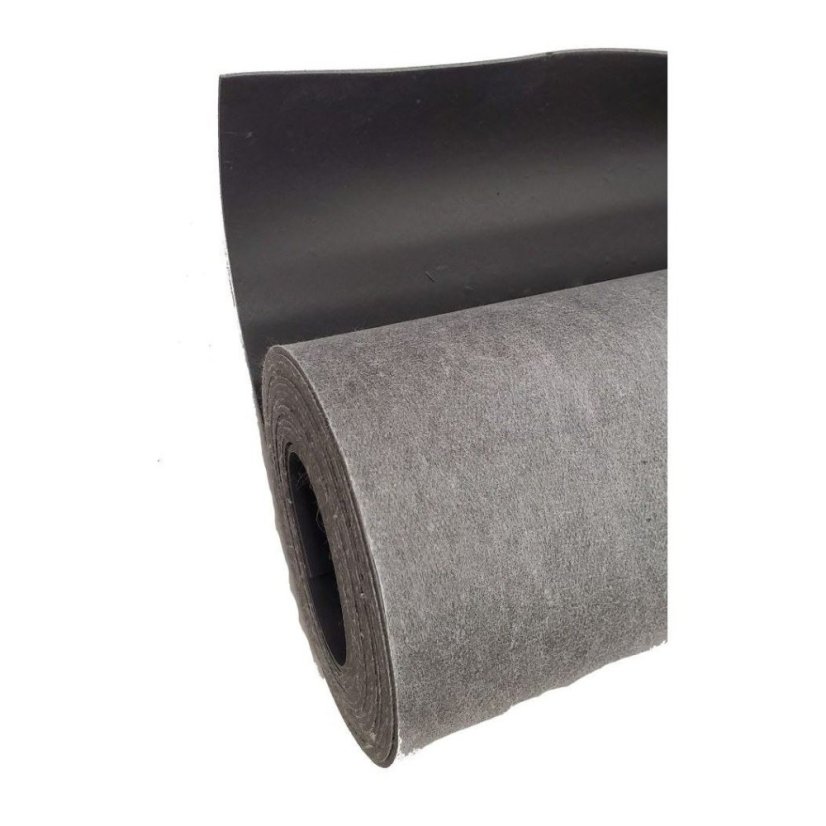
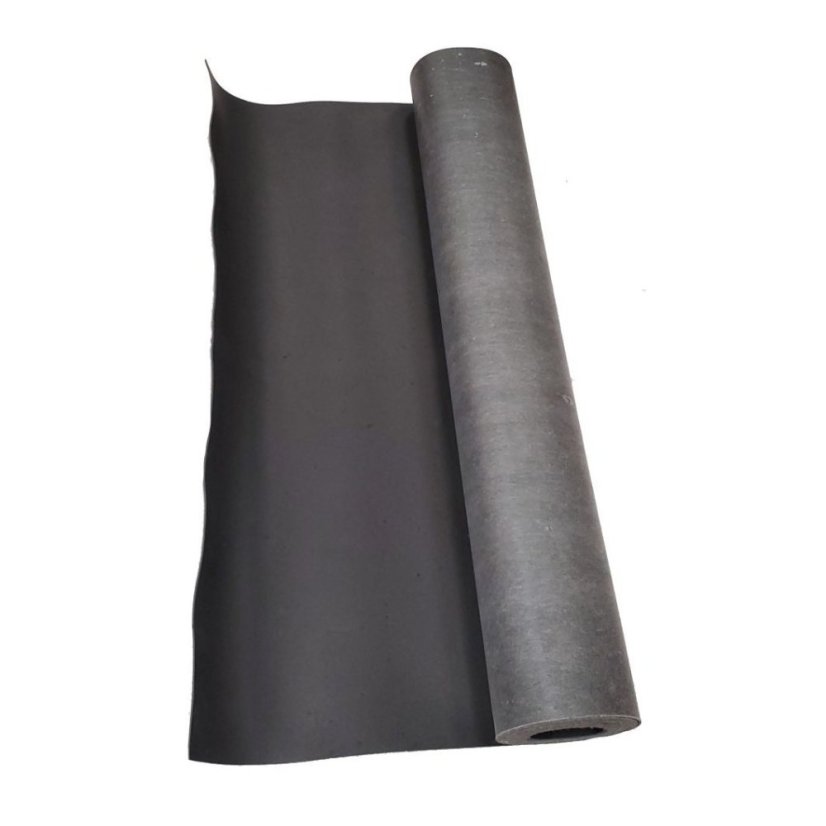
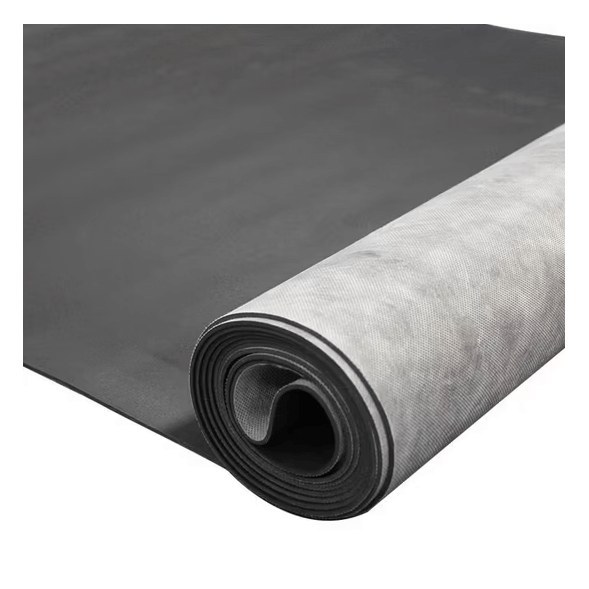
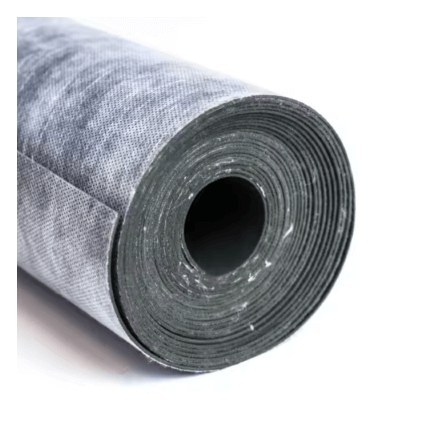


A heavy yet flexible sound barrier made of dense PVC with a mineral filler. It stops sound passing through walls, ceilings and floors while taking up only 3 mm.
- Roll 100 × 500 cm (5 m²) or 105 × 500 cm (5.25 m²) – choose the width in the “MLV roll width” selector next to the price; you will see the price and can add the roll straight to your basket
- Thickness 3 mm, surface weight approx. 5.2 kg/m²
- One side smooth vinyl, the other side a fabric backing
- For walls, floors, ceilings, doors and plant rooms
MLV – a heavy sound barrier only 3 mm thick
MLV (Mass Loaded Vinyl) is a flexible but very heavy sheet of dense PVC with a mineral filler. One square metre weighs about 5.2 kg, yet it is only 3 mm thick. Its weight is what stops sound passing through a wall, ceiling or floor. That is why MLV is used by builders, installers, recording studios and homeowners who want to hear less of their neighbours, traffic or machinery.
- Roll 100 × 500 cm (5 m²) or 105 × 500 cm (5.25 m²) – choose the width in the “MLV roll width” selector next to the price; you will see the price and can add the roll straight to your basket
- Thickness 3 mm, surface weight approx. 5.2 kg/m²
- Cuts with an ordinary utility knife, fixes with screws or staples
- For walls, floors, ceilings, doors and plant rooms
How MLV works: it blocks sound rather than absorbing it
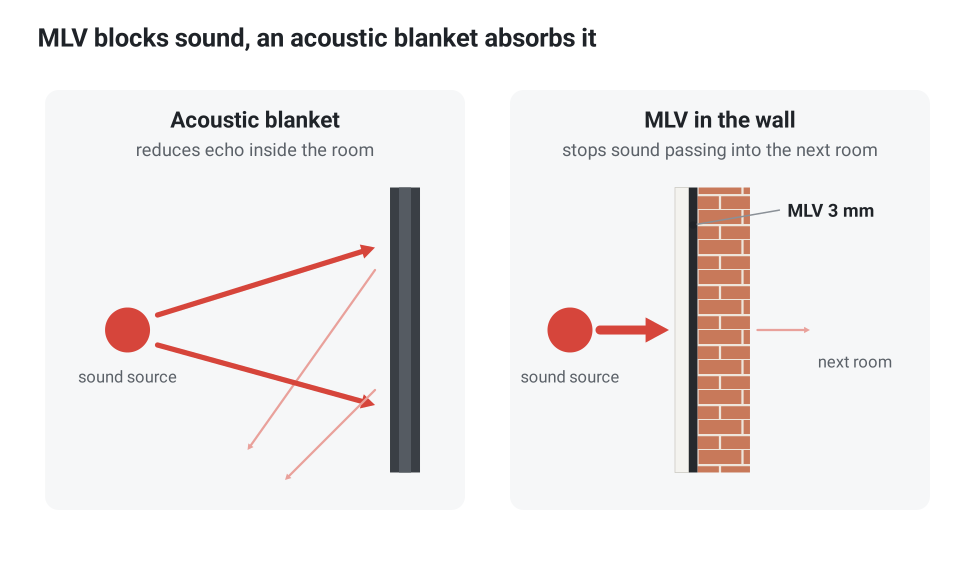
Sound passes through a wall by making it vibrate. The heavier the layer, the harder it is to set in motion and the less sound gets through to the other side. MLV adds mass to a structure while taking up almost no space. It does not deal with echo inside a room, though: a laboratory test measured a sound absorption coefficient of only 0.02–0.05 up to 2,000 Hz. To control reverberation, use acoustic blankets.
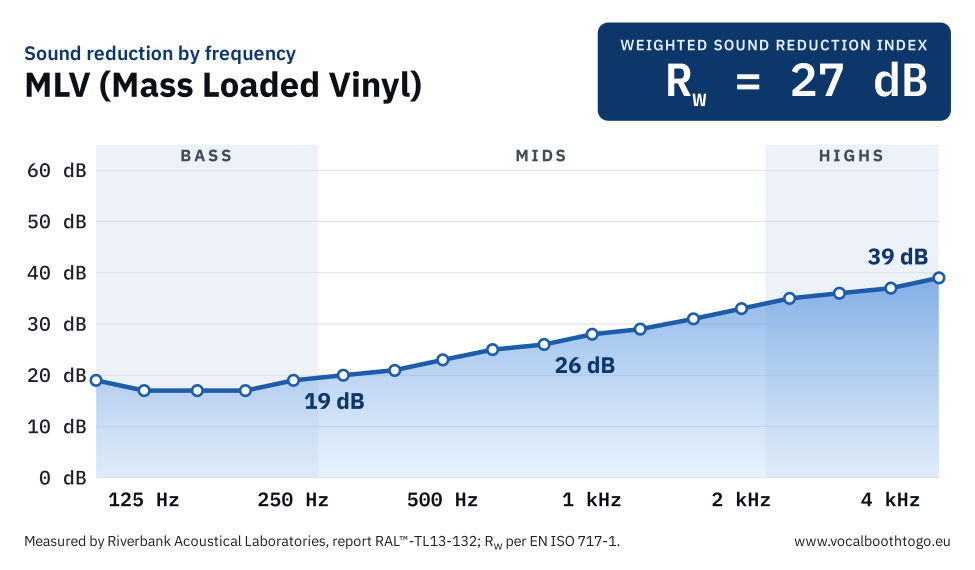
The chart shows the laboratory-measured sound reduction of a specimen of reinforced MLV (Riverbank Acoustical Laboratories, test to ASTM E90, report TL13-132): 17–19 dB in the bass (125–250 Hz), 25–26 dB in the mids (630–800 Hz) and 35–39 dB in the highs (2.5–5 kHz). The values give a weighted sound reduction index Rw = 27 dB according to EN ISO 717-1. MLV blocks high tones such as speech or music better than deep bass and traffic noise. In a real building the whole construction and the sealing of gaps decide the result. The full report is in the article MLV sound insulation certificate.
Walls and partitions
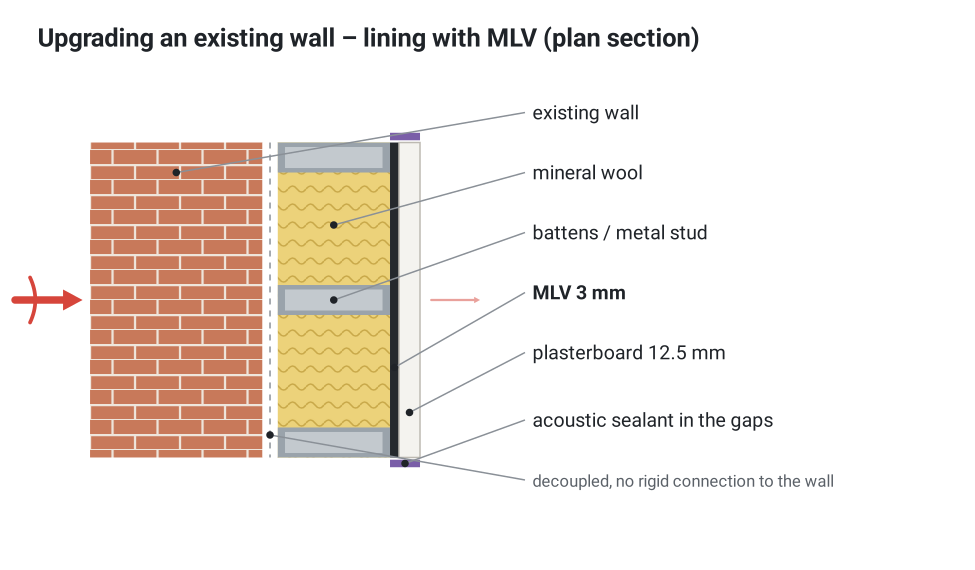
The most common use of MLV. An independent lining is built in front of the existing wall: battens or metal studs filled with mineral wool, MLV on top and plasterboard as the finish. The lining must not be rigidly connected to the wall, otherwise sound travels through the fixings. In a new plasterboard partition, MLV is fixed to the studs under the plasterboard or between two layers of board.
Seal the gaps at the floor, ceiling and adjoining walls with acoustic sealant. Even a small gap can spoil the result of the whole wall.
Floors
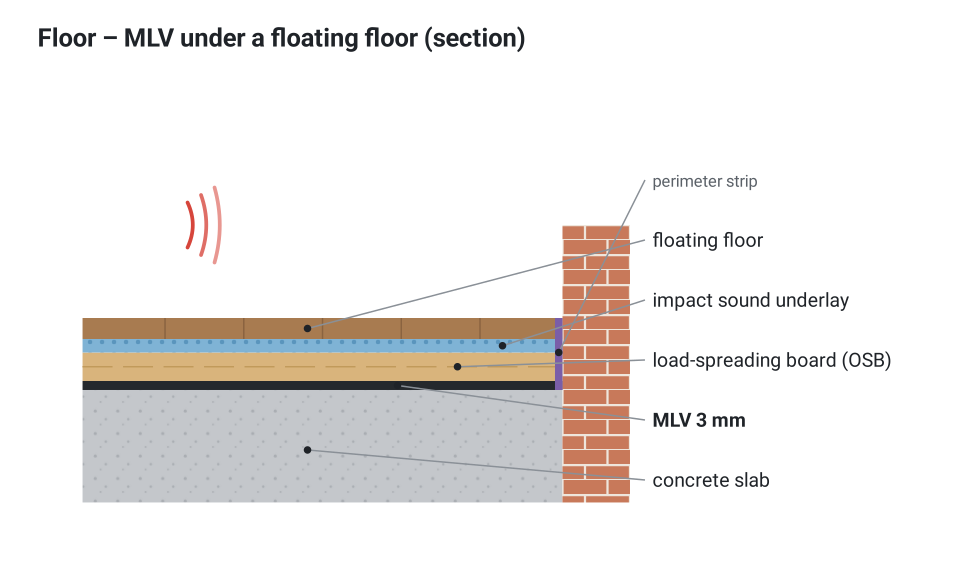
On a floor, MLV is laid directly on the concrete slab under a floating floor. On top of the MLV comes a rigid load-spreading board (OSB or gypsum fibreboard), an impact sound underlay and the floor finish. Leave a perimeter strip so that the floor does not touch the walls. This build-up reduces noise travelling from your home to the neighbours below.
Impact noise from neighbours above you (footsteps, furniture being moved) is best solved in their floor. On your side, only a resiliently suspended ceiling helps – see the next section.
Ceilings
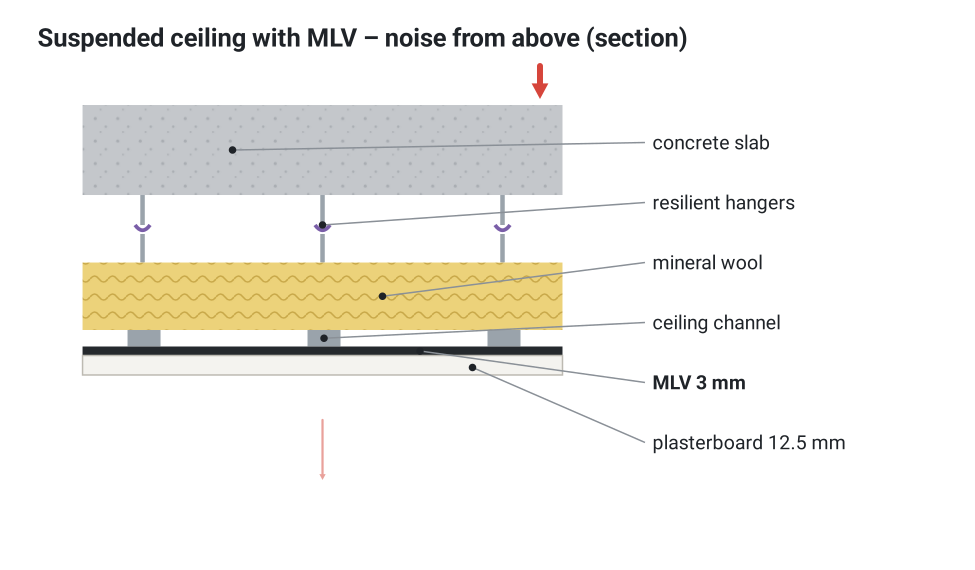
Against noise from the floor above, MLV is fitted into a suspended ceiling: resilient hangers, ceiling channels, mineral wool, MLV and plasterboard. The resilient hangers decouple the ceiling from the slab and the MLV adds mass. On a ceiling, MLV must always be fixed mechanically – adhesive alone cannot hold its weight.
Doors
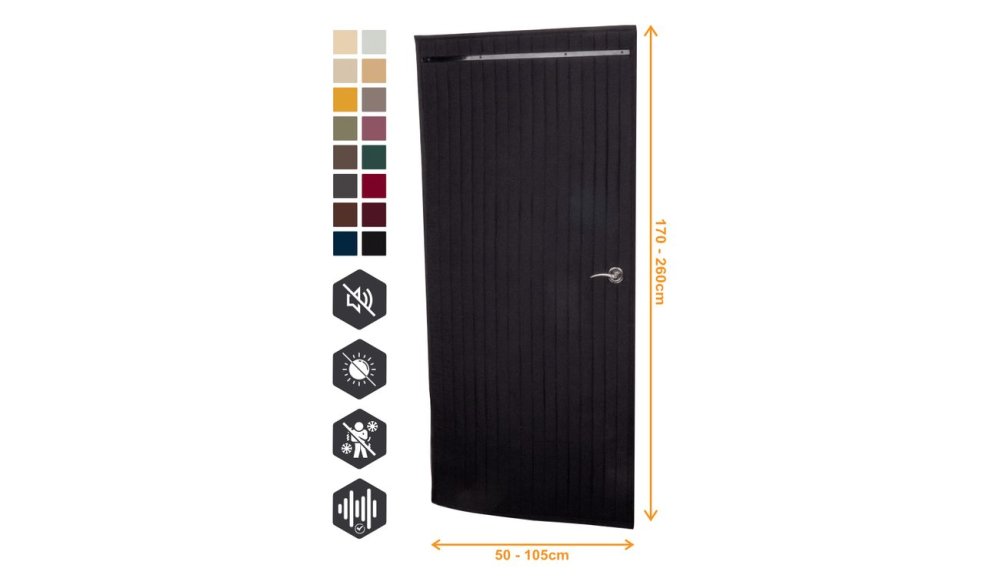
Doors are often the weakest point of a room. That is why we make ready-to-use NovaSilence and FrontSilence panels from MLV, which hang on the door or attach with hook-and-loop tape without any building work. If you prefer to make a panel yourself, cut the MLV to the size of the door leaf and fix it on the inside. Sealing the gap under the door and around the frame always improves the result as well.
Plant rooms, pipes and vehicles
MLV is suitable for plant rooms, boiler rooms and equipment cabinets, and for wrapping waste pipes or ventilation ducts. Wrap the pipe in a layer of insulation (foam or mineral wool) first and only then apply the MLV – fitted directly to the pipe it would transmit vibration. In cars, vans and motorhomes, MLV is fitted to the inside of the body panels under the trim; do not put it in the engine bay.
Outdoors, MLV should only be used when covered. It is not UV resistant and would become brittle in the sun over time.
Installation step by step
MLV is heavy, so it must always be fixed mechanically. Adhesive only helps to hold the sheet in place during installation.
- Measure the area and cut the sheets. MLV is cut with a sharp snap-off knife along a straight edge: simply score it and bend it.
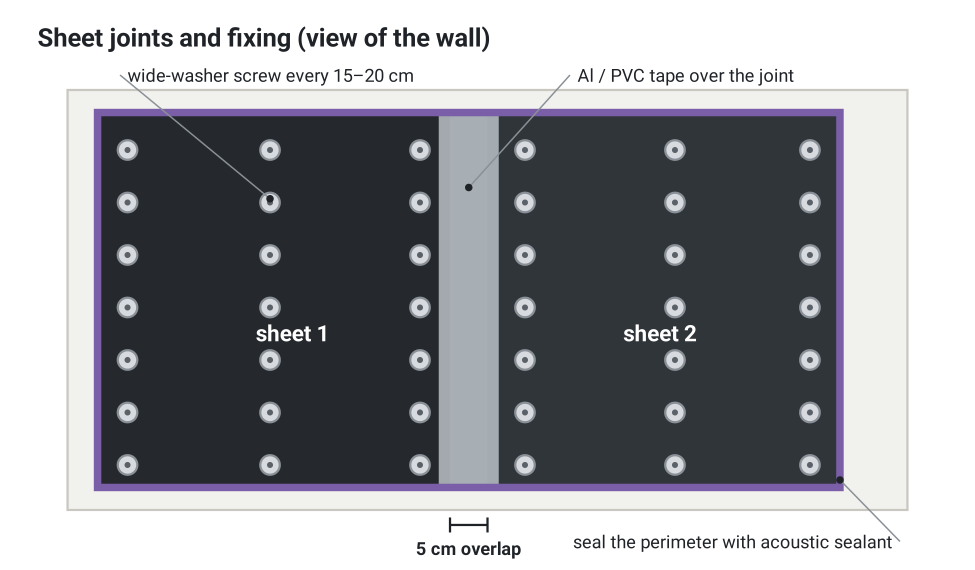
- Place the sheet with the fabric side facing the surface (it is smoother and bonds better) and fix it with wide-washer screws or staples (at least 12 mm) every 15–20 cm, ideally into studs or battens.
- Lay the next sheet with an overlap of about 5 cm, or butt the edges and tape the joint with aluminium or PVC tape. Degrease the surface under the tape first.
- Seal the perimeter at the floor, ceiling and walls with acoustic sealant. Wrap and seal around penetrations (sockets, pipes) as well.
- Cover the MLV with plasterboard or another lining.
Technical data
Data for designers, installers and integrators. For each value we state where it comes from.
| Property | Value | Source |
|---|---|---|
| Material | dense PVC with mineral filler (calcium carbonate) and plasticiser | manufacturer |
| Surface | one side smooth vinyl, the other side fabric backing | |
| Thickness | 3 mm | manufacturer |
| Surface weight | approx. 5.2 kg/m² | manufacturer |
| Roll size | 100 × 500 cm (5 m²) · 105 × 500 cm (5.25 m²) | |
| Roll weight | 27.85 kg · 28.45 kg | our own weighing |
| Colour | grey to dark grey | |
| Sound absorption coefficient α | 0.02–0.05 (125–2,000 Hz) | test ATC200140, Acoustic Testing Center, Chinese Academy of Sciences |
| Measured sound reduction of the MLV specimen | 17 / 19 / 23 / 28 / 33 / 37 dB at 125 / 250 / 500 / 1,000 / 2,000 / 4,000 Hz | measurement of a reinforced MLV specimen, Riverbank TL13-132 |
| Weighted sound reduction index Rw | Rw = 27 dB (C = 0; Ctr = −3) | calculated according to EN ISO 717-1 from the Riverbank TL13-132 measurement |
| Reaction to fire | fire retardant, not non-combustible | manufacturer |
| RoHS (heavy metals, PBB, PBDE) | compliant | SGS test SHAMLC2311930801 |
| Service temperature | −10 to +80 °C, ideally installed at +15 to +20 °C | typical range for MLV sheets |
| Outdoor use | only when covered, not UV resistant | |
| Self-adhesive layer | no | |
| Packaging | roll in a box 18 × 18 × 105 cm |
Related products
MLV is part of several of our products. If you would rather not build anything, choose a ready-made solution:
- NovaSilence – soundproofing door panel with MLV
- FrontSilence – door panel with MLV in a faux leather cover
- SPB booths – mobile soundproof booths with MLV in the walls
- Acoustic blankets – absorb echo, the ideal companion to MLV
Frequently asked questions
Answers to the questions our customers ask most often.
What is MLV made of?
Dense PVC with a mineral filler (calcium carbonate) and plasticiser. One side is smooth, the other has a fabric backing.
How heavy and how thick is it?
It is 3 mm thick with a surface weight of approx. 5.2 kg/m². A 100 × 500 cm roll weighs 27.85 kg, a 105 × 500 cm roll 28.45 kg.
How many dB does it reduce noise by?
The laboratory measurement of a reinforced MLV specimen (Riverbank, report TL13-132) gave a weighted sound reduction index Rw = 27 dB: 19 dB at 250 Hz, 23 dB at 500 Hz and 28 dB at 1,000 Hz. The result in a room depends mainly on the build-up and on sealing the gaps. Details are in the article MLV sound insulation certificate.
Does MLV absorb echo in a room?
No. MLV blocks sound, it does not absorb it. To reduce reverberation, use acoustic blankets or curtains.
How do I fix MLV?
Mechanically: wide-washer screws or staples every 15–20 cm, ideally into studs or battens. Use adhesive only as an installation aid.
Which side faces the wall?
The fabric side faces the surface. It is smoother than the vinyl side and bonds better. The orientation has no effect on the sound insulation.
How do I join the sheets?
Overlap them by about 5 cm, or butt the edges and tape the joint with aluminium or PVC tape. Seal the perimeter gaps with acoustic sealant.
Will MLV help against noise from the neighbours above?
Only in a resiliently suspended ceiling. MLV screwed straight onto the ceiling will not stop footsteps from above.
Can MLV be used outdoors or in a car?
Outdoors only when covered, because it is not UV resistant. In a car yes, on the body panels under the trim, but not in the engine bay.
Is MLV non-combustible?
According to the manufacturer, MLV is fire retardant, but it is not non-combustible. In buildings, cover it with plasterboard in line with fire regulations.
Does MLV smell? Is it safe?
Freshly made material can smell slightly of vinyl for a short time; the smell disappears once it is unpacked and aired. The material has passed an SGS test under the RoHS Directive (heavy metals and brominated flame retardants).
Do you have a technical or safety data sheet?
You will find all technical data in the Technical data table above. MLV is an article, not a chemical mixture, so no safety data sheet is issued for it.
Can you cut MLV to size?
As standard we sell whole rolls of 100 × 500 cm and 105 × 500 cm, plus offcuts from production for smaller areas. Need a different size? Send us an email and we will arrange a custom cut.
Do you offer quantity discounts?
Yes. A quantity discount applies to larger orders – you will find the overview next to the price on this page.
Customer reviews
Arto L. Verified review
David M. Verified review
[FOTO: h ... more
David Y. Verified review
Verified review from a registered customer.