

 Germany (EUR) in Deutsch
 Czech Republic (CZK) in Czech
 France (EUR) in French
 Spain (EUR) in Spanish
 United Kingdom (GBP) in English
 Österreich (EUR) in Deutsch
 Polska (PLN) – Polski


How to insulate windows for winter (without replacing them)
A poorly sealed window lets out a large share of a room’s heat: the glass gets cold, cold air slips in through the gaps and the room never feels properly warm. Replacing windows is expensive and often not an option if you rent. Fortunately, a few low-cost steps make a noticeable difference without any building work. This guide goes through them in order, from the simplest to the most thorough.
Where a window loses heat
 A window loses heat in three ways. First, through the glass itself: single glazing or old double glazing feels cold to the touch and chills the air in the room that comes into contact with it. Second, through the gaps between the opening part and the frame, and between the frame and the wall, where cold air gets in. And third, on sash windows, through the gaps where the two sashes meet and slide past each other.
Step 1: Find the draughts
On a windy day, run your hand slowly around the frame: wherever you feel moving air, the window needs sealing. A candle or an incense stick shows it even more clearly – if the flame flickers or the smoke drifts, there is a leak. Another simple test: close the window on a sheet of paper. If the paper slides out without any resistance, the window does not close tightly at that point.
Step 2: Seal the gaps
Sealing the gaps is the cheapest step and the one you will notice most:
- Self-adhesive foam, rubber or silicone seals on casement windows, between the opening casement and the frame.
- Brush seals on sash windows, where the sashes slide past each other and cannot press against a rubber seal.
- Silicone or decorator’s caulk in any cracks between the frame and the wall.
- On uPVC and tilt-and-turn windows, turn the adjustable locking cams (or keeps) to the tighter winter setting so the window presses more firmly against the seals.
Step 3: Add a layer of air with window film
On single glazing, a clear window insulation film fixed to the frame with double-sided tape and shrunk taut with a hairdryer creates an extra layer of still air in front of the glass. It is cheap, almost invisible and can be removed in spring.
Step 4: Hang a thermal curtain
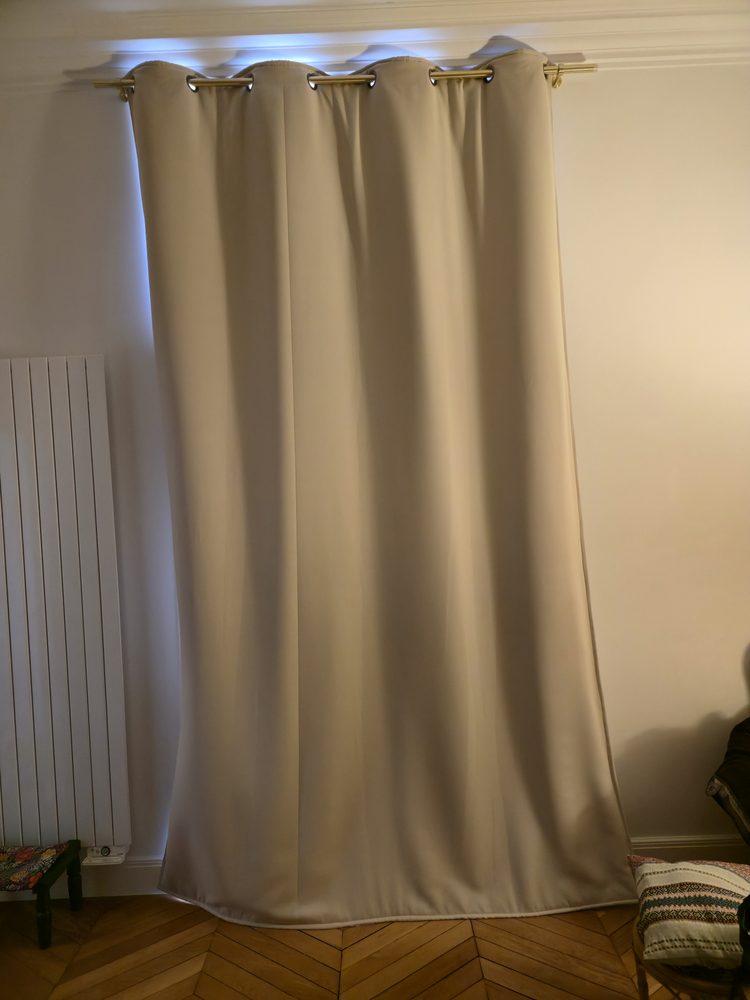 A thick curtain creates a layer of still air in front of the glass and slows the flow of heat towards the cold window. To work, it has to be heavy, cover the whole window with an overlap at the sides and the top, and reach almost to the floor (unless there is a radiator below the window – see Step 5). Ideally it hangs from a ceiling track, so that warm air cannot escape over the top towards the glass.
Our thermal curtains are made of a dense, heavy quilted material; the PRO models also have a blackout fabric sewn on the front. According to each model’s product data, they insulate as follows:
- deNoise 1300 – single layer: thermal insulation of 30–40%
- deNoise PRO 1550 – single layer with blackout fabric: 35–45%
- deNoise 2600 – double layer: 50–60%
- deNoise PRO 2850 – double layer with blackout fabric: 65–85%
The same curtains do four things at once: they reduce street noise, keep out the cold, absorb echo in the room and black it out (95–100%). If noise is what bothers you most, see our soundproof curtains.
Step 5: Use the curtain wisely in winter
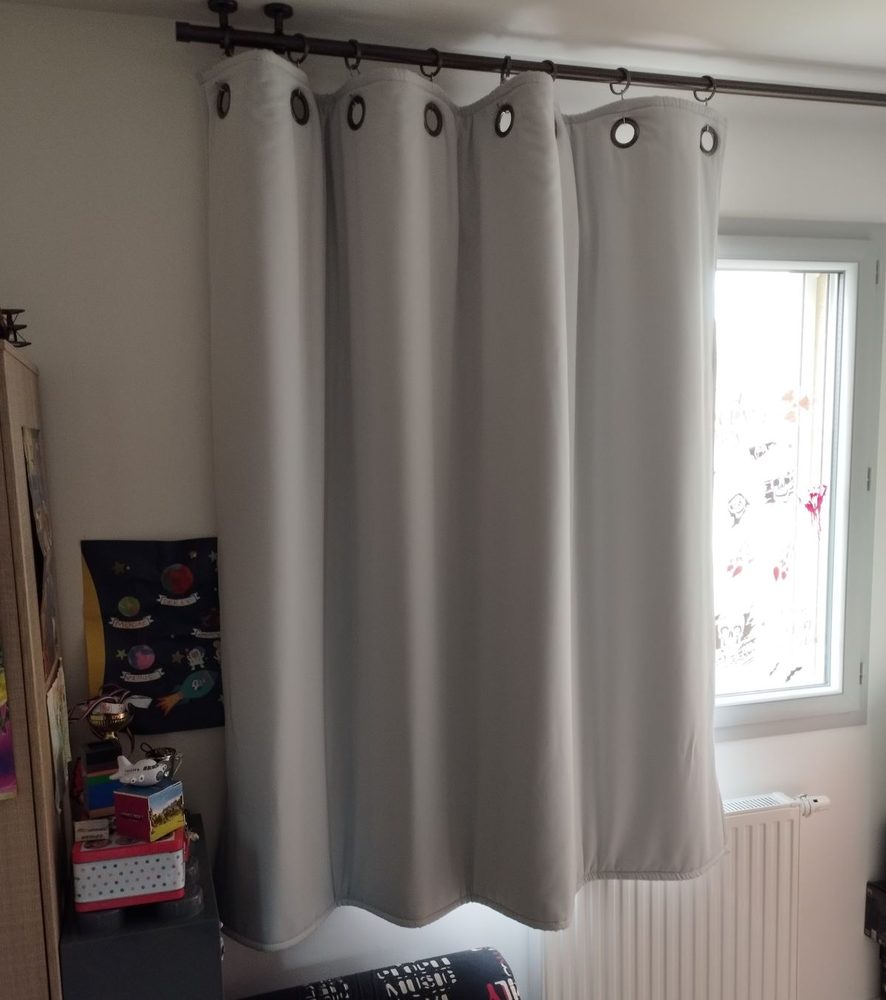 A thermal curtain works best when used sensibly. Close it as soon as it gets dark and keep it closed until morning – the glass is coldest at night. On sunny days, open it: the sun coming through the glass warms the room for free. And if there is a radiator under the window, the curtain should stop at the level of the windowsill, without covering the radiator – otherwise the heat rises between the curtain and the glass instead of staying in the room.
Other things that help
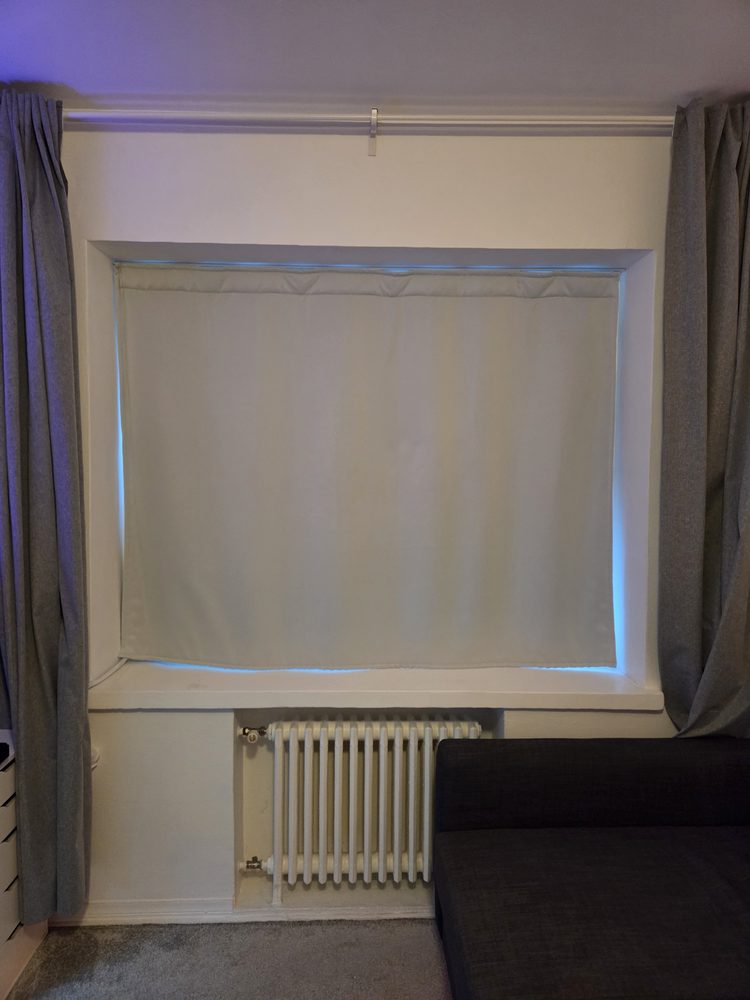 As well as the steps above, a few small measures help:
- A draught excluder along the bottom of the window or the door of the room.
- Closing blinds or shutters at night adds another layer of air in front of the glass.
- If the cold comes mainly through the front door, see our thermal door curtains.
When is it worth replacing the window?
If the window is single-glazed, the frame is warped or rotten, or there is condensation between the panes of a double-glazed unit, these steps only ease the problem; in the long run, new windows – or, for listed or period sash windows, secondary glazing – are the better investment. If you rent, or in the meantime, the steps in this guide are the quickest and cheapest way to a warmer room.
What our customers say
From a review in our shop:
“They are great. They have cut the sound down from my busy London street and seem to keep the heat in really efficiently too.”
– Rebecca, United Kingdom (deNoise 1300 curtains)
Frequently asked questions
The questions customers ask us most often about cold, draughty windows.
Do thermal curtains really work?
Yes, if they are heavy and cover the whole window. A thin decorative curtain barely insulates; a curtain with a dense, heavy lining such as our deNoise PRO 2850 provides thermal insulation of 65–85% according to its product data.
How do I stop draughts from sash windows?
With brush seals where the sashes meet and slide, and a thermal curtain that covers the whole window.
Is a thermal curtain useful in summer too?
Yes. Closed during the sunniest hours, it keeps the heat out of the room.
How quickly is a curtain made?
Every curtain is made to measure in our workshop within 1–2 working days and then shipped.