

 Germany (EUR) in Deutsch
 Czech Republic (CZK) in Czech
 France (EUR) in French
 Spain (EUR) in Spanish
 United Kingdom (GBP) in English
 Österreich (EUR) in Deutsch
 Polska (PLN) – Polski


How to soundproof a room: a step-by-step guide
In most rooms the noise does not come through the solid walls but through a few weak points: gaps around the window and the door, a light door leaf and poorly sealed glazing. Deal with these first and you get the biggest improvement for the least money – and without building work. This guide takes you through the steps in the order that makes sense, with realistic expectations for each one.
Find out where the noise gets in
Before you buy anything, spend ten minutes listening. Stand close to the window, then to the door, then to each wall, and notice where the sound is loudest. Traffic and voices from the street usually come through the window; conversations, TV and footsteps from the rest of the home come through the door; a neighbour's music may come through a shared wall or the ceiling.
It also helps to tell two kinds of noise apart. Airborne noise – voices, music, traffic – travels through the air and through every gap. Impact noise – footsteps, slammed doors – travels through the structure of the building. The steps below deal mainly with airborne noise, because that is the one you can reduce yourself.
Soundproofing and acoustic treatment are two different things
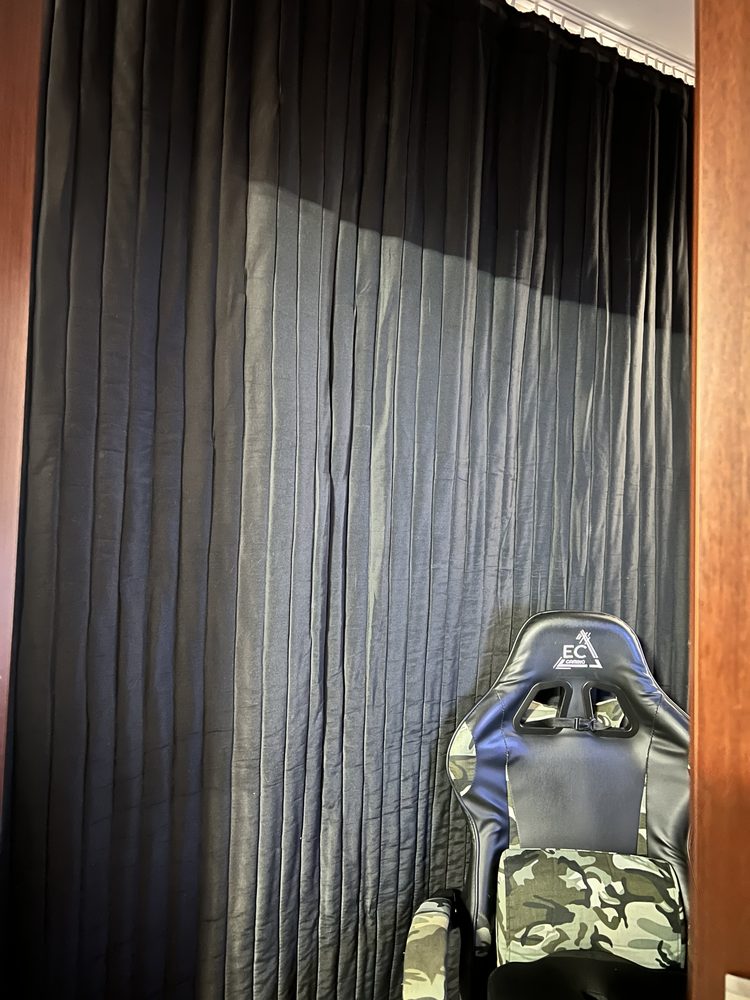 Soundproofing stops sound from passing from one space to another. It needs mass and airtightness: heavy, dense materials and no gaps. Acoustic treatment reduces the echo inside a room, so speech is clearer and the room feels calmer; it needs soft, absorbent materials. Thin acoustic foam or egg boxes on the wall reduce the echo a little, but do almost nothing against noise from outside. The best solutions do both – a heavy curtain, for example, adds mass in front of the window and absorbs echo at the same time.
Step 1: Seal the gaps
Sound travels wherever air travels, so even a small gap lets through a surprising amount of noise. This is the cheapest step, and every step that follows works better once it is done:
- Check that the windows close tightly and replace worn or flattened window seals.
- Fit self-adhesive seals into the door frame, so the door closes against them all the way round.
- Close the gap under the door with a door sweep or a drop-down door seal – interior doors often have a gap of a centimetre or more.
- Fill cracks around window frames, pipes and cables with acoustic sealant.
Do not block ventilation openings, though – every room needs fresh air, especially a bedroom.
Step 2: Soundproof the window
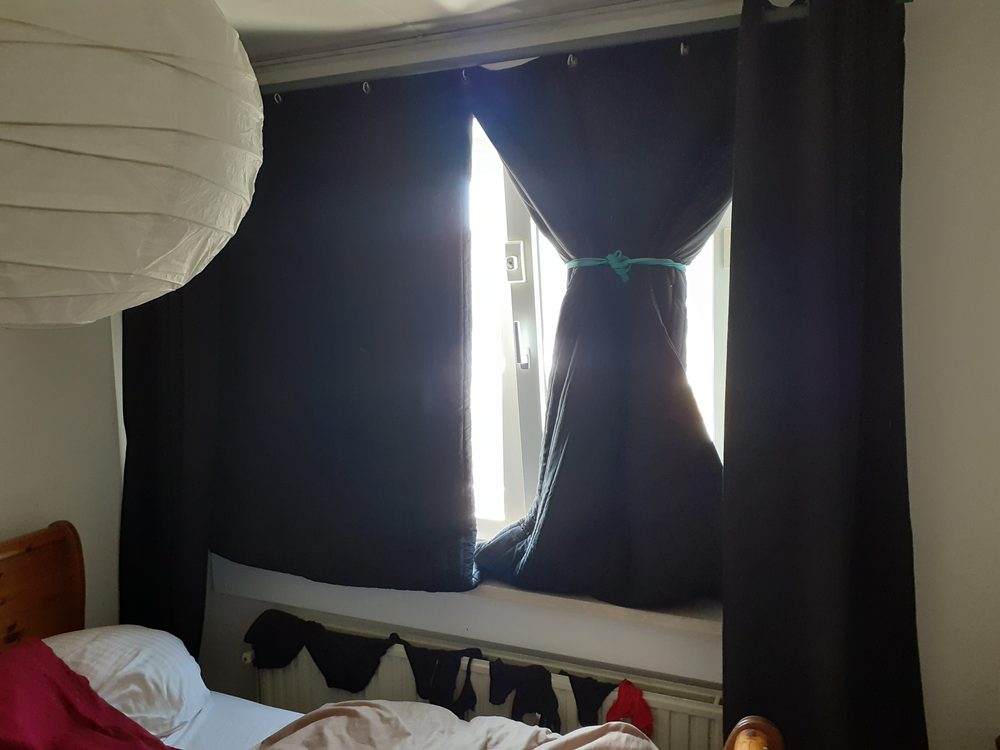 The window is usually the weakest part of an outside wall. New acoustic glazing is the most effective solution, but also the most expensive, and in a rented home it is often not an option. A heavy curtain is the practical alternative: it adds a layer of mass in front of the glass and absorbs part of the sound that still gets through. What matters is the weight of the curtain – an ordinary curtain or a thin blackout curtain weighs a few hundred grams per square metre and makes little difference.
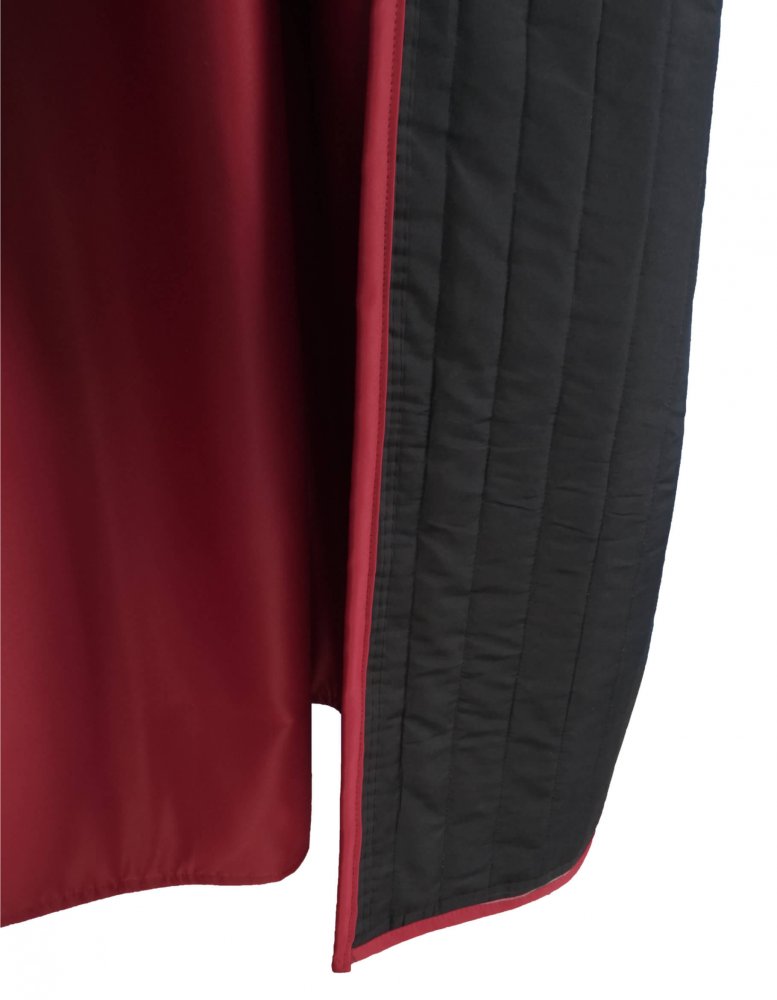 Our soundproof curtains are made of a dense, heavy quilted acoustic material; the PRO models also have a blackout fabric sewn on the front. These are the values we state for each model:
- deNoise 1300 – single layer, 1300 g/m²: 10–15 dB
- deNoise PRO 1550 – single layer with sewn-on blackout fabric: 13–17 dB
- deNoise 2600 – double layer: 15–25 dB
- deNoise PRO 2850 – double layer with blackout fabric: 23–37 dB
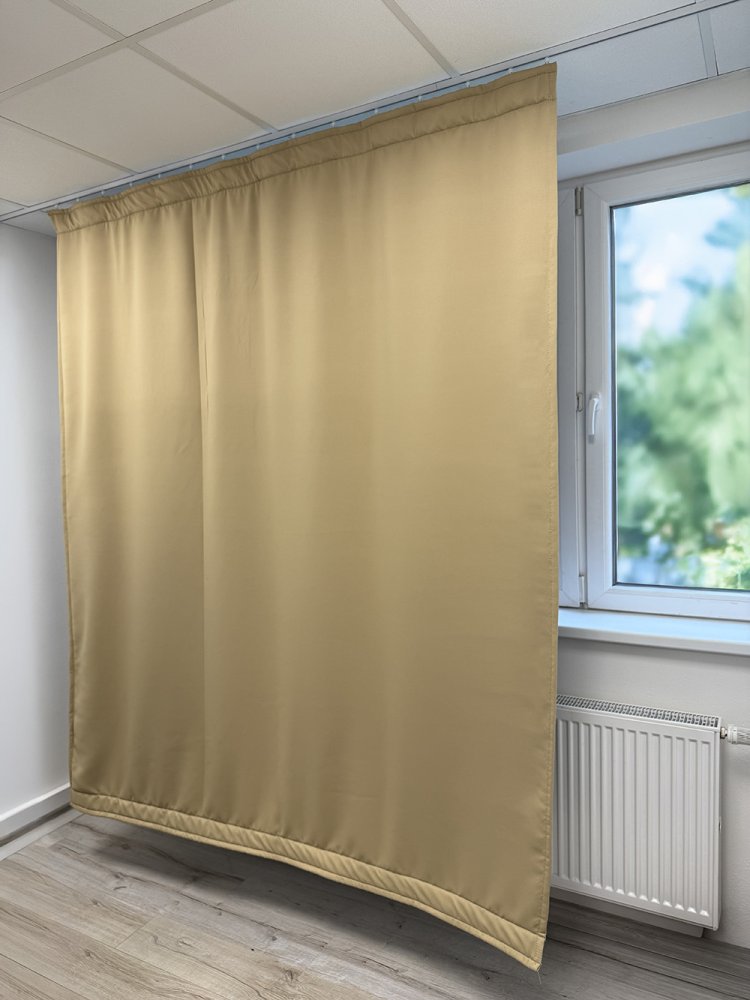 How the curtain hangs matters as much as the curtain itself. It should overlap the window by 15–20 cm on each side and above, reach almost to the floor (leave about 3 cm so it does not drag) and ideally hang from a ceiling track, so that there is no gap at the top. A double-layer curtain is heavy – a 150 × 220 cm deNoise PRO 2850 weighs about 9.5 kg – so the curtain pole needs a bracket in the middle as well as at both ends. The same curtains also keep in heat (thermal insulation of 30–85 % depending on the model) and darken the room (95–100 %).
Step 3: Soundproof the door
 Interior doors are usually light and often hollow, so they let through voices and TV from the rest of the home. You do not need a new door – you can add mass to the one you have. Our door soundproofing panels are made to the exact size of your door and attach with Velcro or, for NovaSilence, with a metal bracket. NovaSilence and FrontSilence contain a 3 mm layer of mass loaded vinyl and reduce noise – the MLV assembly they are based on measured Rw 32 dB (21–22 dB at low, 29–31 dB at mid and 39–46 dB at high frequencies); FrontSilence has a wipeable faux leather surface for front doors. All the steps are in our guide on how to soundproof a door.
Step 4: Walls, ceiling and floor
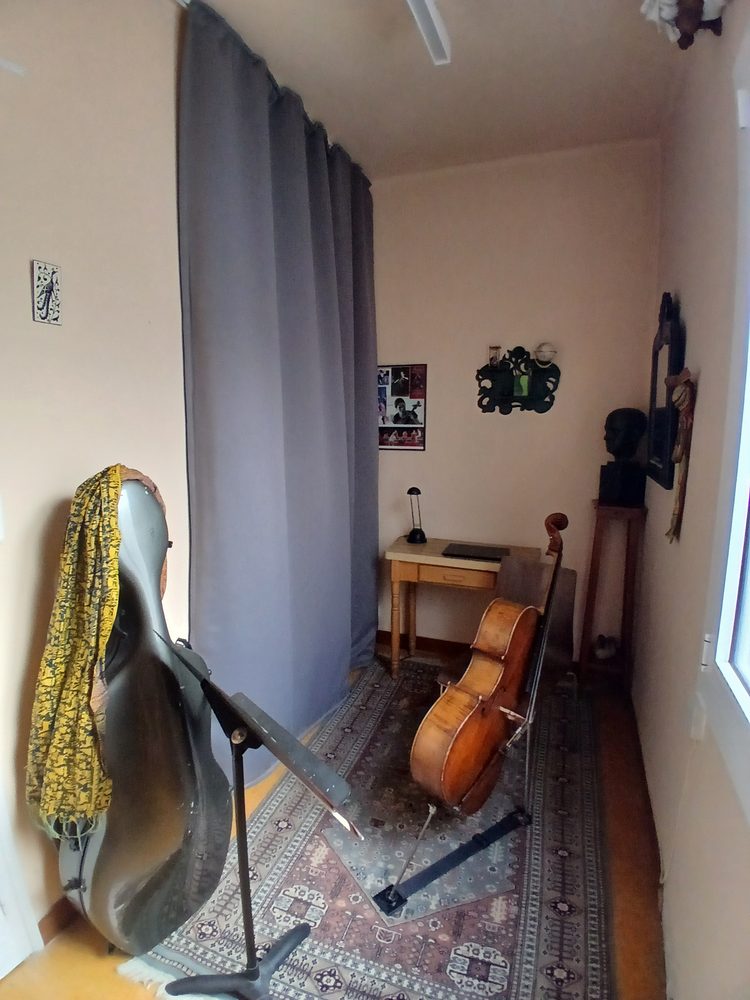 If the noise really comes through a wall or the ceiling, there is no quick fix. A real improvement means building work: an additional layer of plasterboard on its own frame or on resilient bars, filled with mineral wool. It takes up several centimetres of floor space and is best planned with a builder.
Without building work you can still help a little. A full bookcase or a wardrobe against the shared wall adds mass, and thick rugs soften the footsteps heard by the neighbours below. Many of our customers also hang several acoustic blankets one behind the other on the problem wall, and they tell us they can hear the difference – the more layers, the more noise the blankets hold back.
Step 5: Reduce the echo in the room
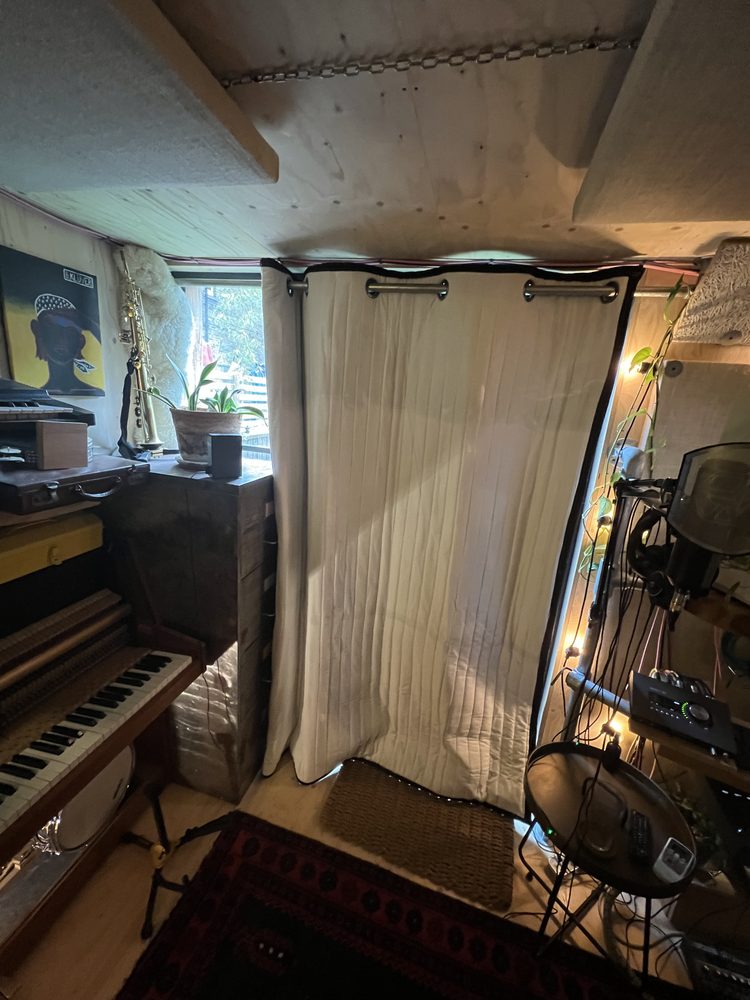 A bare room with hard walls and floors reflects sound, which makes every noise seem louder and speech harder to understand. Soft, heavy materials absorb these reflections. Our acoustic material was measured at Riverbank Acoustical Laboratories: one layer reaches a sound absorption coefficient of αw 0.75 and two layers αw 1.00 – the highest absorption class (see the certificate). For rooms used for recording, podcasts or music, see our acoustic curtains and acoustic blankets.
When a quiet room is not enough: a soundproof booth
If you need real silence for recording vocals or voice-over, or for practising an instrument, it is often easier to create a quiet space inside the room than to soundproof the whole room. Our soundproof booths are free-standing cabins that you assemble yourself and can take with you when you move.
Frequently asked questions
These are the questions we hear most often from customers who want a quieter room.
Can you soundproof a room completely?
Not without building work. With sealed gaps, a heavy curtain and a door panel you can make a room noticeably quieter, but low sounds such as bass or the rumble of lorries are the hardest to stop and will still be partly heard.
What is the cheapest way to soundproof a room?
Sealing the gaps around the window and the door. It costs little, and every other measure works better afterwards.
Do soundproof curtains really work?
Yes, if they are heavy and cover the window completely. A double-layer curtain such as the deNoise PRO 2850 reduces noise by 23–37 dB; a light curtain or a thin blackout curtain makes almost no difference.
Does acoustic foam stop noise from the neighbours?
No. Foam absorbs echo inside the room, but it is far too light to stop sound passing through a wall.
How quickly can I get a curtain or a door panel?
Every curtain and panel is made to measure in our workshop within 1–2 working days and then shipped.